
 TRT injection sites: IM and SubQ locations and rotation
 How to draw testosterone into a syringe, step by step
 SubQ testosterone: how it works, the evidence and safety
 TRT needle size: needles and syringes for testosterone
 Lump after testosterone injection: causes and when to call
 Scared to inject testosterone? What helps with needle fear
 How to store testosterone cypionate safely at home
 Flying with testosterone: TSA rules, customs and packing
 How to dispose of needles at home: sharps disposal for TRT
How do you inject testosterone?
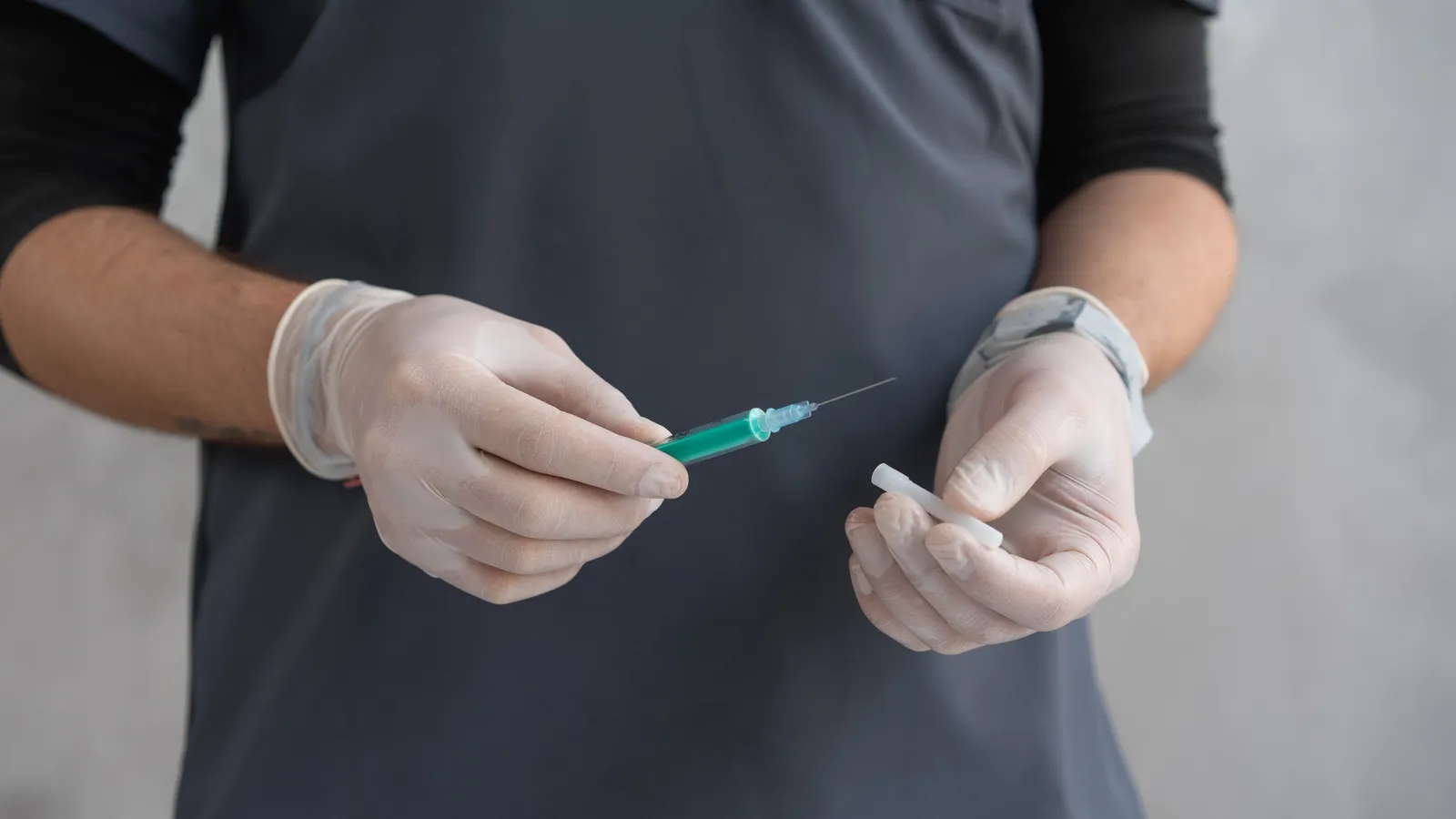
How to inject testosterone is something to learn in person first. A nurse, a pharmacist or your prescriber shows you how to draw up the medicine, find the site and give the shot. Then they watch you do it.
Learn your first injection in person. This guide covers everything around that lesson.
This guide covers everything around that lesson. That means what to have ready, how the steps fit together and what’s normal afterwards. It also covers the practical details most people work out by trial and error.
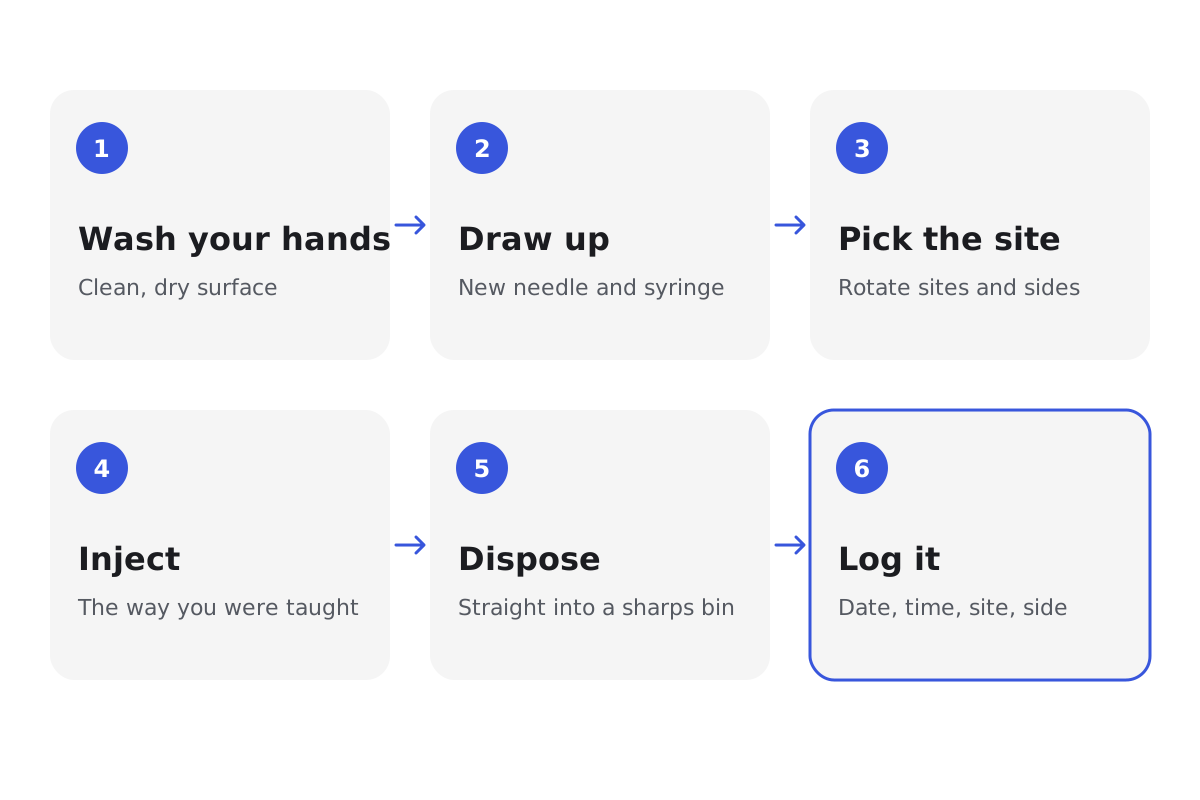
The order of an injection day. Step 4 is the part to learn in person.
Your first injection is worth planning. Here is how to set up the lesson:
- Ask your prescriber’s office who will teach you.
- Book the session before your first shot is due.
- Bring the supplies you’ll use at home, so you learn on the same syringe and needles.
- Ask them to watch you do the whole thing once, from washing your hands to the sharps container.
- Ask them to show you the sites you’ll rotate between.
Two choices aren’t yours to make alone. The first is the route: into muscle (intramuscular, or IM) or into the fat under the skin (subcutaneous, or SubQ). That comes from your product and your prescriber.
The DEPO-Testosterone label says cypionate is “for intramuscular use only.” Xyosted, on the other hand, is labeled for SubQ use in the belly. The second choice, the amount and schedule, comes from your prescription.
Here is what the main US testosterone injection labels say, side by side:
| Product | Route and site on the label | Who injects | Storage |
|---|---|---|---|
| DEPO-Testosterone and generic cypionate | Intramuscular, deep in the gluteal muscle | Prescribed for home or clinic use | 68 to 77°F, protect from light |
| Generic enanthate | Intramuscular, slowly and deeply into the gluteal muscle | Prescribed for home or clinic use | 68 to 77°F |
| Azmiro (cypionate) | Deep gluteal intramuscular; the prefilled syringe is for healthcare professionals | Clinic for the syringe | Its own range: check the label |
| Xyosted (enanthate auto-injector) | Subcutaneous, abdomen only | You, after training | Room temperature; don’t refrigerate or freeze |
| AVEED (undecanoate) | Intramuscular, gluteal | Clinic only, with observation afterwards | Clinic-handled |
Two tools help along the way. The injection volume calculator turns the amount on your prescription into mL and syringe units. The injection site rotation planner suggests your next site.
The rest of this page goes section by section. Each topic also has its own full guide.
What supplies do you need for testosterone injections?
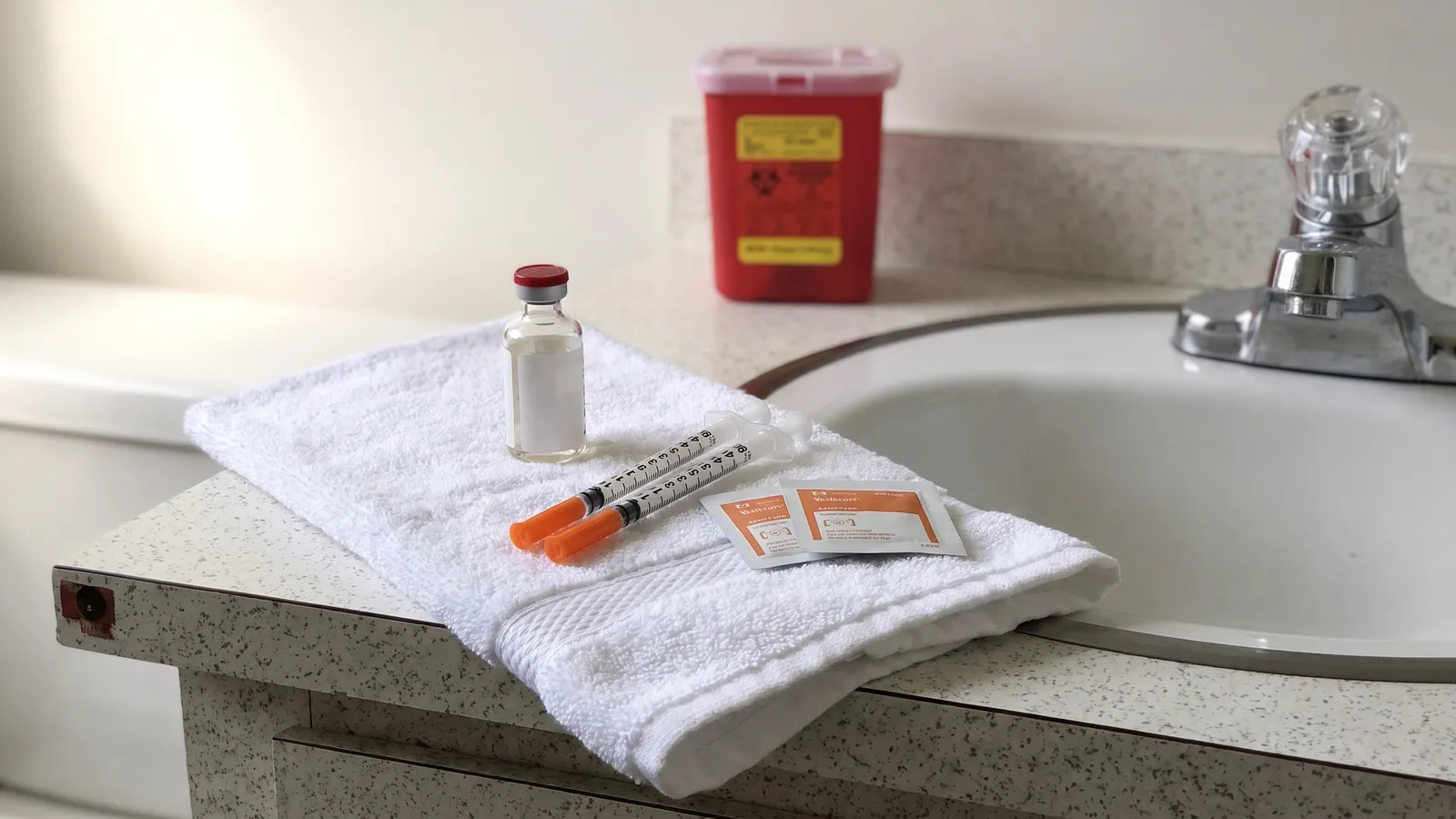
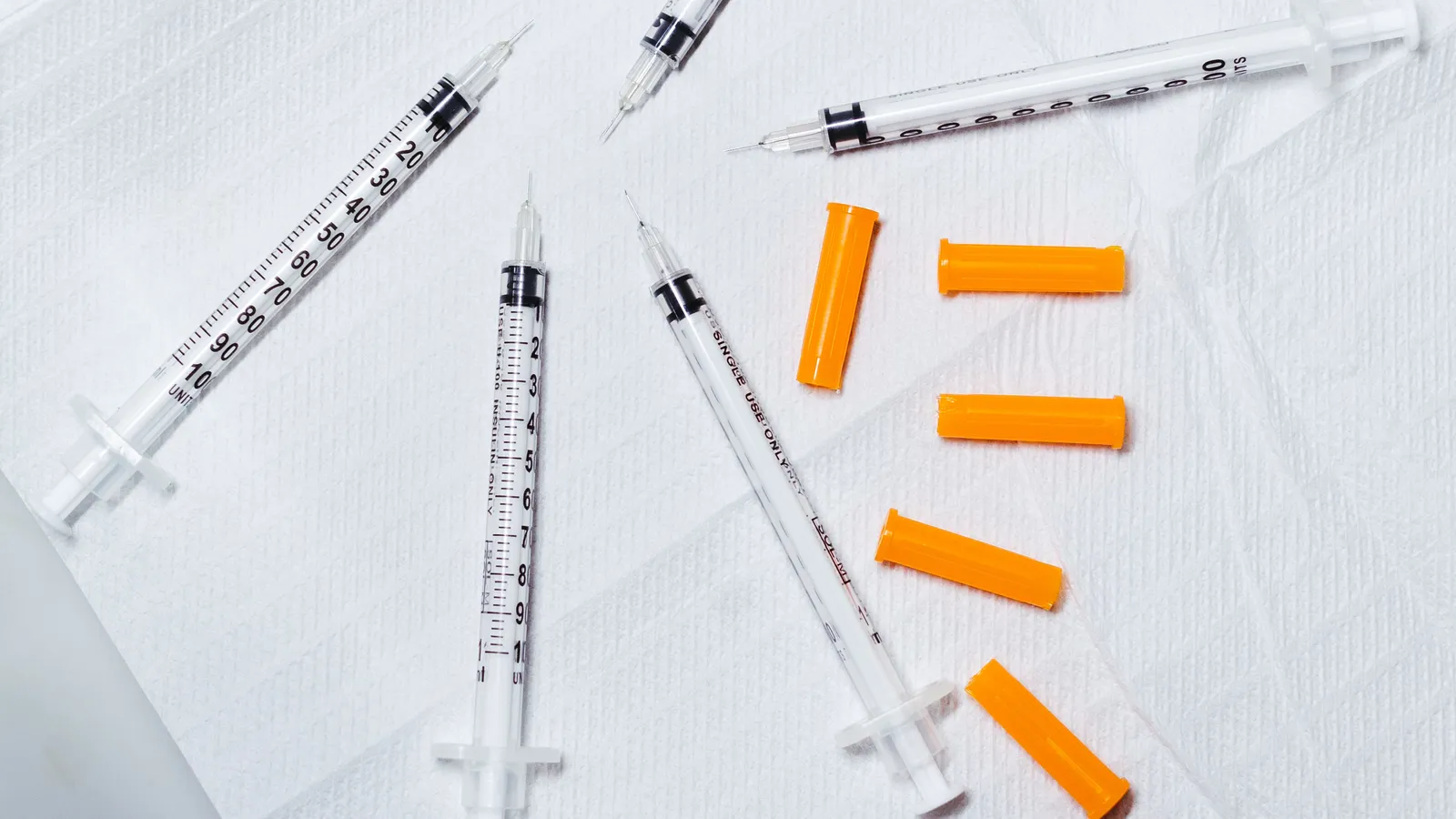
Our full guide on needles and syringes for TRT covers what each testosterone study used. It also explains why your prescriber picks the sizes. A typical kit for a vial includes:
- the vial itself
- syringes
- a needle to draw with and a needle to inject with
- alcohol pads
- a sharps container
To see how many doses a vial holds and when to reorder, use our vial supply calculator. Enter the amount on your prescription.
The labels won’t tell you the sizes. Testosterone cypionate labels name no needle gauge or syringe size. So your supplies come from your prescriber or pharmacist.
Only one testosterone label names a needle: AVEED, a product given in the clinic. It draws up with an 18-gauge needle, then swaps to a new needle to inject.
A few terms help when you talk about supplies:
- Gauge is how thick a needle is. The higher the number, the thinner the needle.
- Length decides how deep the needle reaches. This matters a lot for IM shots; more on that below.
- Luer-Lok syringes screw onto the needle. A review of SubQ testosterone prefers them, so the needle can’t come loose while you push thick oil.
- Insulin syringes have a fine, short needle built in. In today’s insulin syringes it is 6 mm. They are marked in units instead of mL.
You may see needle sizes taken from vaccine guidance. The CDC says most adults need a 1- to 1.5-inch needle for a vaccine in the shoulder muscle. It adds that a clinician’s judgment still applies.
But vaccines are watery, and testosterone is thick oil. So treat those numbers as background, not a shopping list.
Use a new needle and syringe every time, and never share them.
How do you draw testosterone into the syringe?
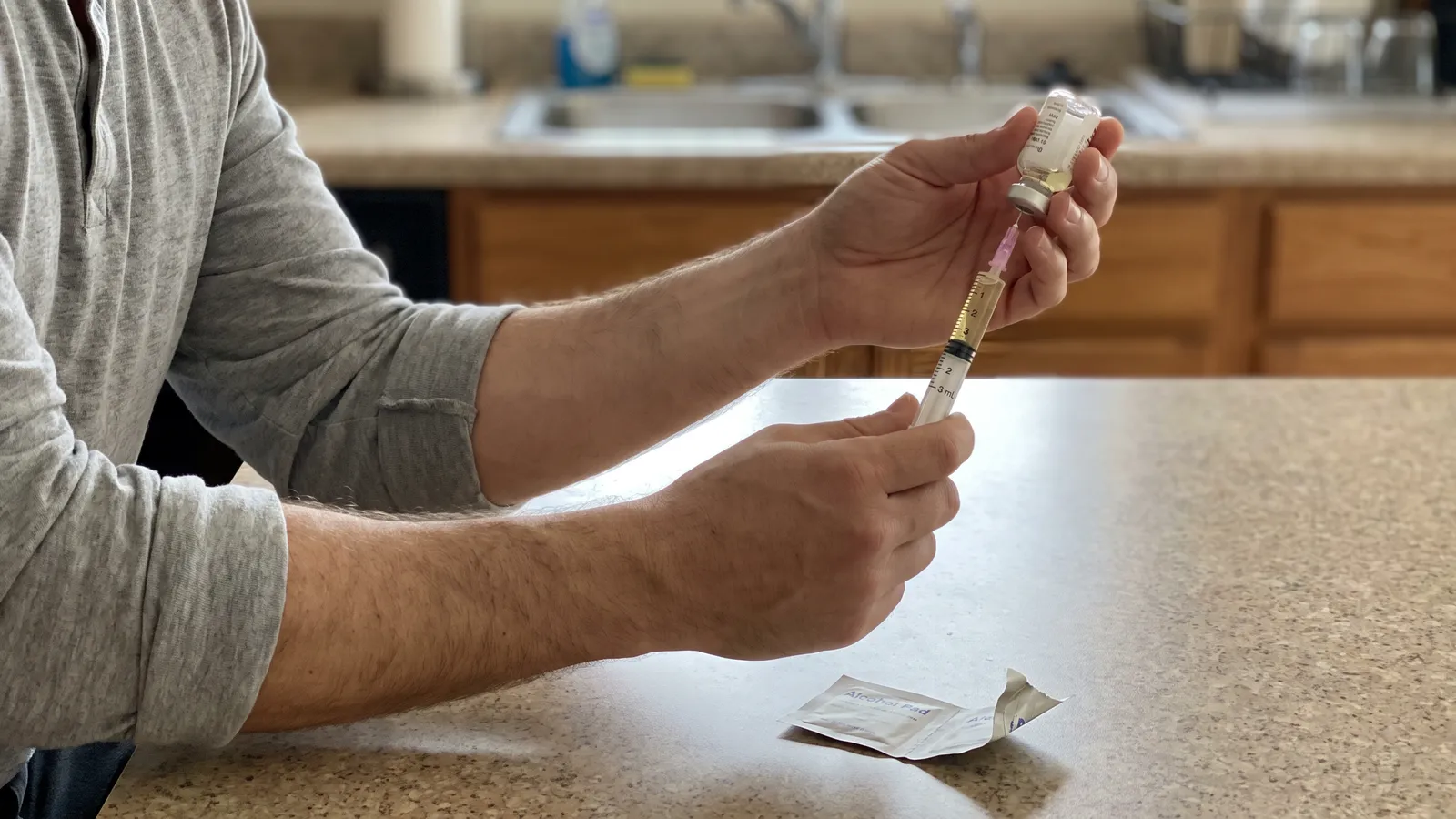
Our full guide on drawing testosterone into a syringe goes into more detail. Drawing up happens on the counter, before the needle goes near your skin. It’s also where most mistakes with amounts happen.
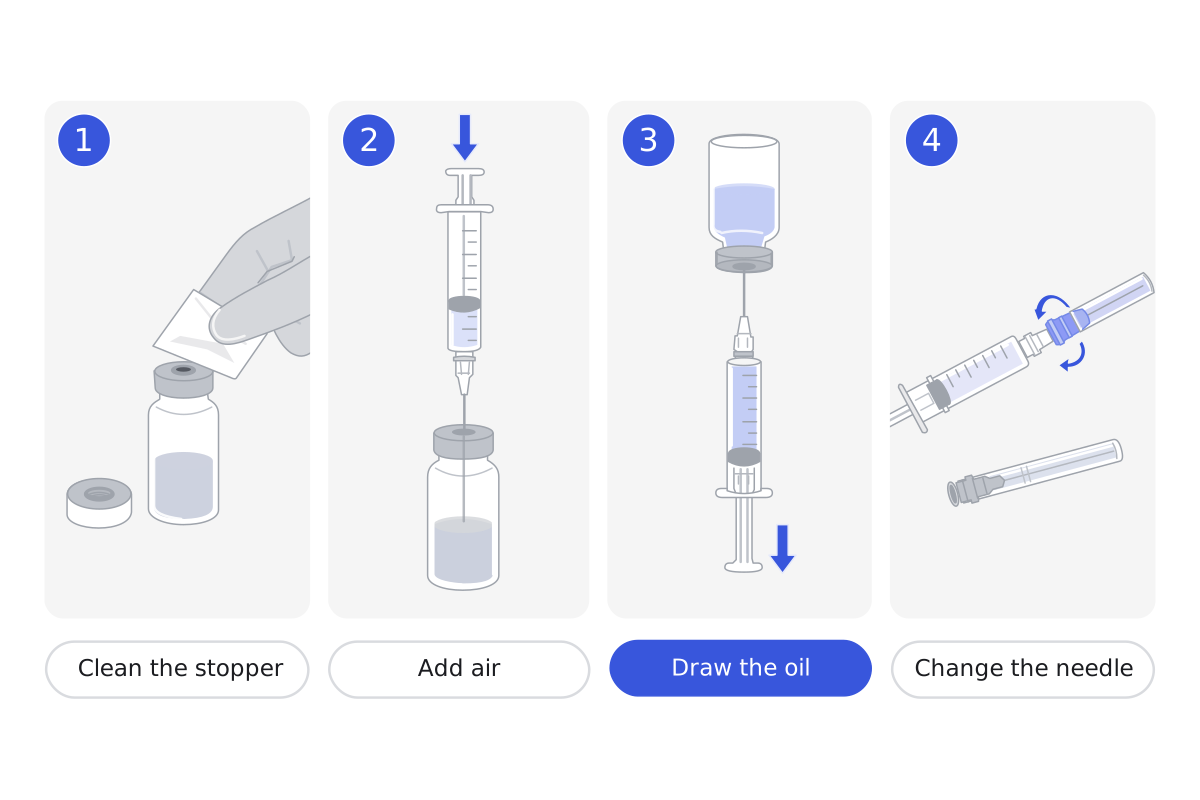
The four core steps of drawing up: clean the stopper, add air, draw the oil, change the needle.
The core steps are:
- Check the vial.
- Wipe the rubber stopper with alcohol.
- Push in air.
- Turn the vial upside down.
- Slowly draw the oil to the line on your prescription.
- Remove bubbles.
- Switch to a fresh needle.
CDC guidance says to clean a vial’s stopper with alcohol before you pierce it. It also says to enter a vial only with a new needle and syringe. Turning the vial upside down and tapping out bubbles are common teaching, not label wording, so the person who shows you may do it a little differently.
The labels ask you to look at the oil first. It should have no particles and no change in color.
Reading the syringe is the step that trips people up. Insulin syringes are marked in units, and on a U-100 syringe, 100 units equal 1 mL. The FDA has reported overdoses of another injected medicine when people mixed up units and mL.
The injection volume calculator converts your prescription into mL and units for your vial’s strength. Check the result with your pharmacist.
Where should you inject testosterone, and how do you rotate sites?
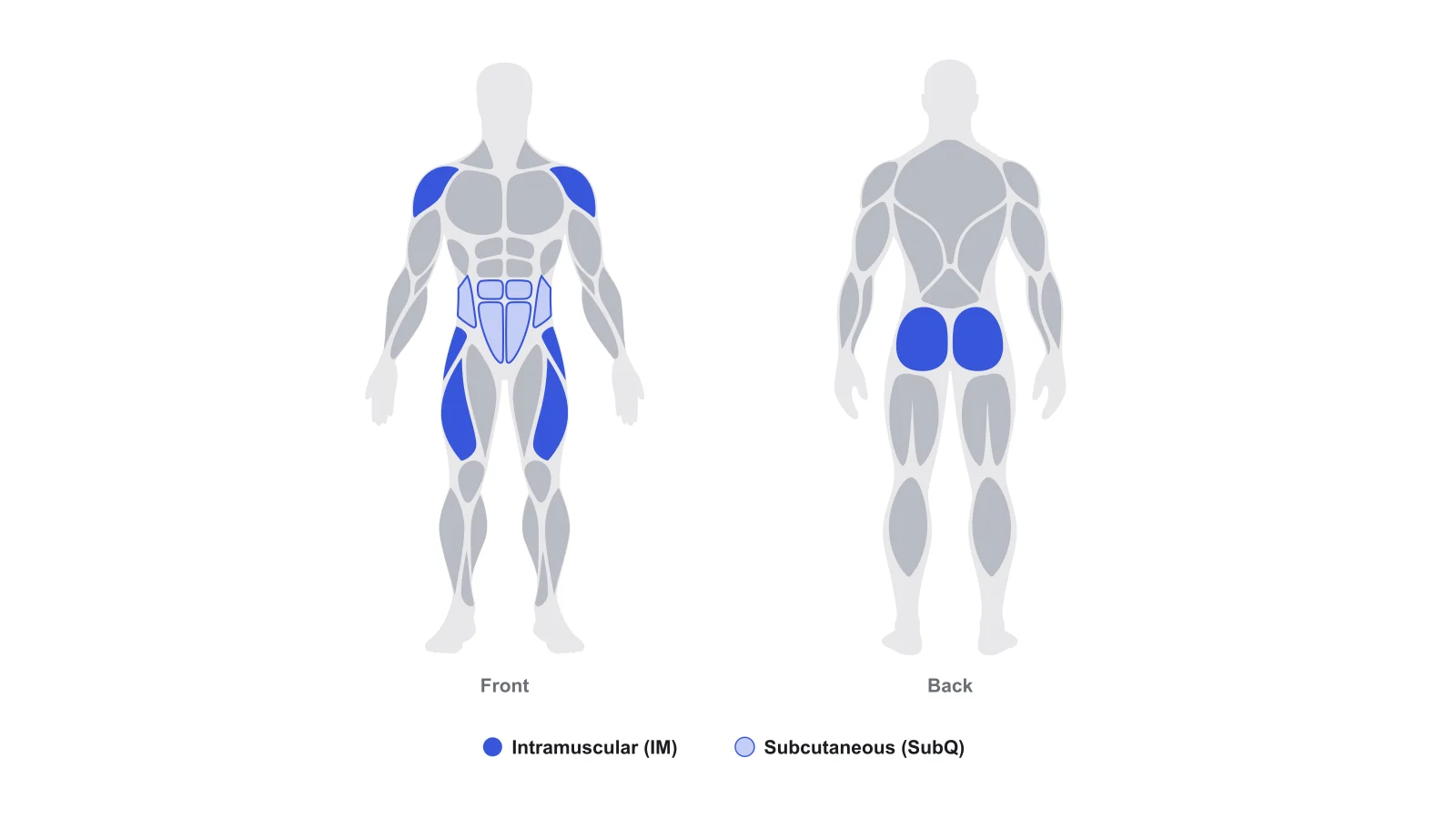
Our full guide on testosterone injection sites shows each one in more detail. IM testosterone goes into a large muscle: the side of the hip, the upper outer buttock, the outer thigh or the shoulder. SubQ testosterone goes into the fat under the skin, usually on the belly or the love handles.
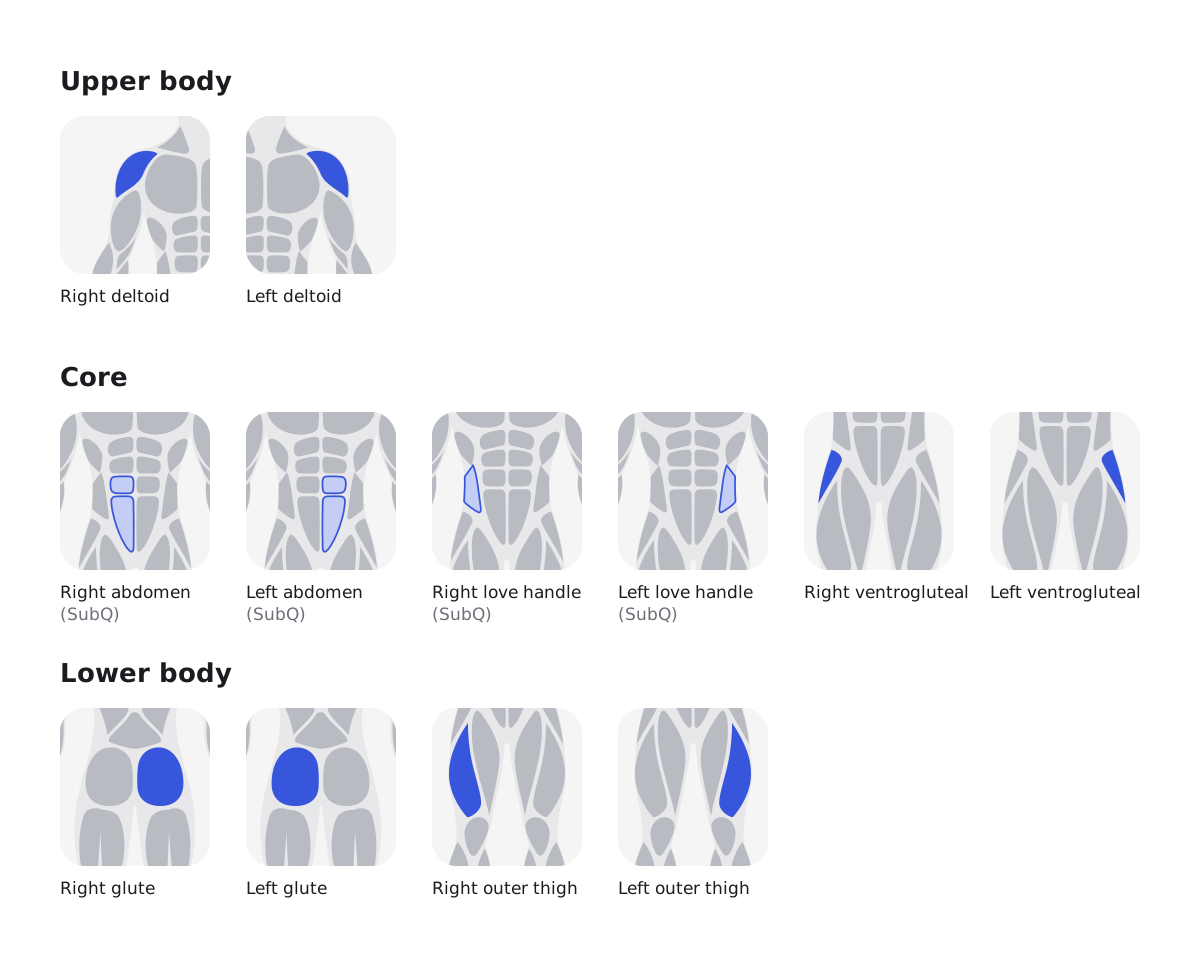
The twelve sites in the TRTracker app, grouped by upper body, core and lower body. Dark blue marks IM sites, light blue SubQ sites.
The labels are specific. Cypionate is given deep in the buttock (gluteal) muscle. Xyosted’s instructions limit it to the left or right side of the belly, away from the area within 2 inches of the navel.
Xyosted’s instructions also say not to inject where skin is tender, bruised, red, scarred or hard. Which other sites suit you is your prescriber’s call. Finding each one is part of the in-person lesson.
Rotation means not using the same spot every time, so each spot has time to recover. Even the label for AVEED, a clinic-given shot, tells providers to switch between the left and right buttock.
Common patterns switch sides or cycle through two or three sites. The rotation planner suggests the next one on the same body map the app uses.
Which hygiene steps matter at every injection?
A few rules apply to every shot, IM or SubQ. They come straight from injection-safety guidance and the labels:
- Clean hands and a clean surface. Wash your hands before you touch your supplies.
- New needle and syringe every time. CDC guidance says a vial is entered with a new needle and a new syringe, even for the same person. Never share needles, syringes or vials.
- Clean the stopper and the skin. Wipe the vial’s stopper with alcohol before you pierce it. Clean the skin the way you were taught, and let both dry.
- Healthy skin only. Xyosted’s instructions say not to inject where the skin is tender, bruised, red, scaly, hard, scarred or has stretch marks. That makes sense for any site.
- Sharps straight into the container. Don’t leave a used needle on the counter, or try to recap it in a hurry.
None of this takes long once it’s a habit. These are the same basics clinics follow to prevent infections.
What does an intramuscular injection involve?
This section is an overview, not a lesson. An IM shot puts the medicine through the skin and the fat underneath, into the muscle. For testosterone, the oil then forms a small pocket (a depot) in the muscle that releases testosterone over days.
The labels add only a little detail. The enanthate label says to inject slowly and deeply into the buttock muscle, with the usual care for IM shots, such as avoiding a blood vessel. It adds that these shots are well tolerated when given properly.
Neither cypionate label comes with home instructions for use.
Needle length shows why the lesson should be in person. In a CT scan review of 100 adults, standard needles did not reach the buttock muscle in a considerable number of patients.
In another imaging study of 50 hospital patients, only 32% of shots meant for the buttock muscle ended up in muscle. That was 56% in men and 8% in women; the rest were in fat. How deep your muscle sits depends on your body and the site.
So your nurse or pharmacist should show you the details for your site and your body. That means where exactly to place the needle, at what angle, how fast to push and whether to pull back first. The Xyosted Medication Guide sets the standard: your provider shows you how, and you shouldn’t inject until you’ve been trained.
How is SubQ testosterone different from IM?
Our full guide on SubQ testosterone goes deeper. With SubQ, the oil goes into the fat under the skin through a short, thin needle. IM uses a longer needle to reach muscle.
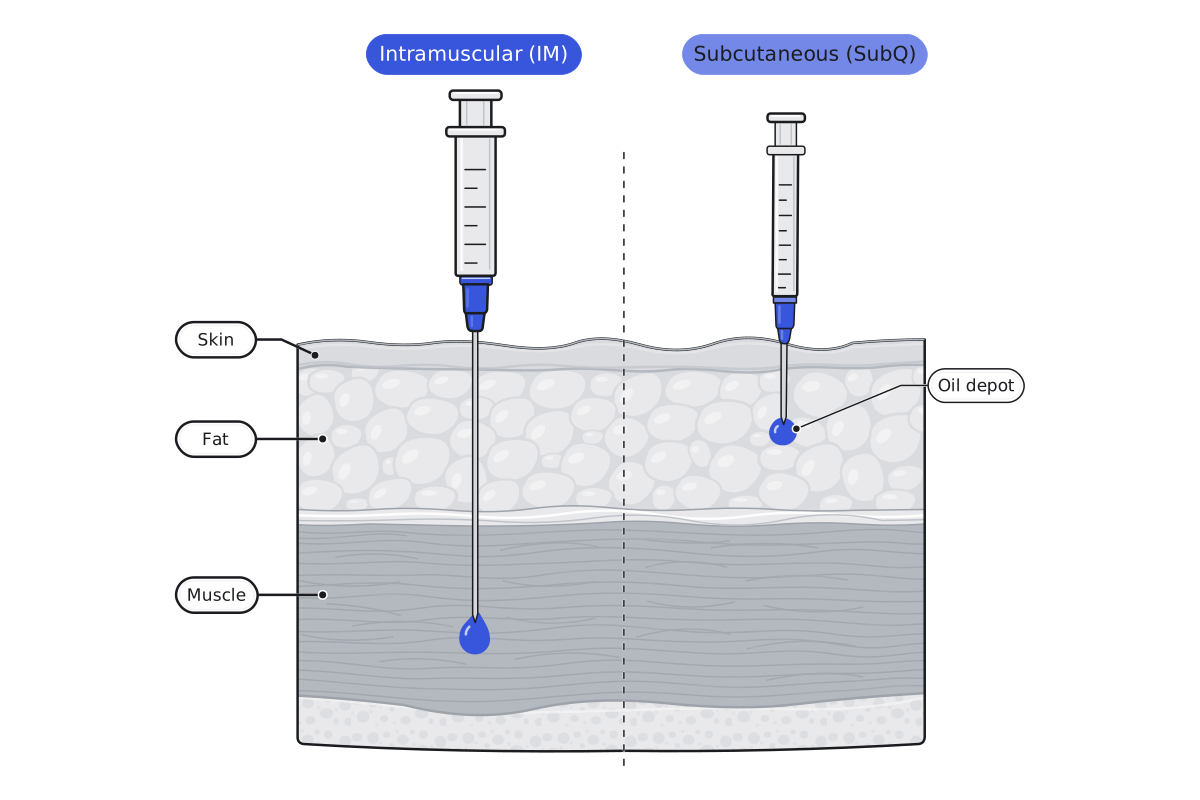
IM reaches the muscle; SubQ stops in the fat layer. The thickness of the fat layer varies a lot between people and sites.
In small studies, SubQ shots at similar weekly amounts gave blood levels close to IM. A 2022 review stressed that the data are limited.
Many people in studies preferred SubQ. In a study of 63 transgender men, all 22 who had switched from IM preferred it. The results may not apply to every product or person.
The catch is the label. Xyosted is the only FDA-approved SubQ testosterone injection. The cypionate labels are for IM use, so SubQ cypionate is a prescriber’s decision.
Mild site reactions still happen with SubQ. In Xyosted’s clinical studies, 12.7% of patients had one, and none stopped treatment because of it. Don’t switch routes on your own, and expect your blood-test timing to change if you do.
What’s normal after a testosterone injection, and when should you call?
Our full guide on injection site pain and lumps sorts reactions into three groups: normal, call your prescriber, and emergency. Some reactions are expected.
The cypionate labels list inflammation (redness and swelling) and pain at the injection site as a side effect. In the Azmiro study, where shots were given in the clinic, 26% of men had some redness at the site, all mild. Xyosted’s guide lists bruising, bleeding, redness and hardness at the site.
Call your prescriber about signs of a skin infection. These include redness, swelling, pain or warmth that’s getting worse, or pus. The CDC says to contact your provider, especially with a fever or if it doesn’t improve within 48 hours, and not to pick at or pop the bump.
Also call about a hard lump that grows or doesn’t go away.
Here is a quick guide to where each kind of reaction falls:
| What you notice | What it usually means | What to do |
|---|---|---|
| Soreness for a day or two, a small bruise, a drop of oil or blood | Common local reaction | Note it in your log; mention it if it keeps happening |
| A small soft bump after SubQ | Oil being absorbed | Watch it; mention it if it lasts or grows |
| Spreading redness, warmth, swelling, pus, or fever | Possible infection | Call your prescriber promptly |
| A hard lump that grows or stays painful | Needs checking | Call your prescriber |
| Coughing fit, throat tightness, chest pain, trouble breathing, swelling or rash soon after the injection | Possible oil-related or allergic reaction | Get emergency help |
One rare reaction needs emergency help. Enanthate labels describe rare coughing fits, an urge to cough and breathing trouble right after a shot of oil-based testosterone.
The Endocrine Society says cough has been reported rarely after undecanoate, and even more rarely after enanthate and cypionate. The cause is unknown, but it has been blamed on oil reaching the lungs. For coughing fits, throat tightness, chest pain, trouble breathing, a rash or swelling after a shot, get emergency help.
What if you’re nervous about needles?
Our full guide on testosterone injection anxiety covers what the evidence says helps. It also covers your options if you can’t inject yourself yet. You’re far from alone.
A review of studies found needle fear in about 20 to 30% of young adults. It falls with age and is less common in men than women. It is also common among people whose condition needs regular shots.
Fear can change what people do. In a survey of 115 adults on insulin, 14% had avoided shots because of anxiety.
For most people, though, nerves fade with practice, and a supervised first shot helps. Some practical tips have official backing. For people who might faint, the CDC says to sit or lie down for the shot and to stay that way for a while afterwards.
In a small study of people on gender-affirming therapy who tried both routes, SubQ scored lower than IM for anxiety and pain. So the route is worth discussing with your prescriber.
For high levels of fear, a review of trials found that exposure-based therapy (slow, guided practice with needles) reduced needle fear in adults after treatment. A technique called applied tension helped with fainting.
If fear is stopping you from injecting, tell your prescriber. A nurse can give the shots at first, or a therapist can help.
How should you store testosterone?
Our full guide on storing testosterone covers crystals, opened vials and expiry dates. The labels are simple. Store cypionate at 68 to 77°F (20 to 25°C), away from light.
Enanthate vials have the same temperature range. Xyosted’s guide is the only one that says outright not to refrigerate or freeze it. It also says to keep it in its carton until use.
The Azmiro prefilled syringe has a slightly different range, so check the storage section of your own label. If a vial gets cold and crystals form, the cypionate label says warming and shaking should dissolve them again. If they don’t, don’t use the vial, and ask your pharmacist.
Testosterone is a Schedule III controlled substance under federal law. Keep it in its labeled box, out of reach of children and visitors, as the Xyosted guide asks for all medicines. Write the date you first opened a multi-dose vial on it, and ask your pharmacist when to throw it away.
How do you travel with testosterone and needles?
Our full guide on traveling with testosterone covers TSA screening, customs and other countries’ rules. Within the US, the TSA allows unused syringes when they travel with injectable medicine. You must tell the officers about them at the checkpoint.
The TSA recommends labeled medicine, but doesn’t require it. Used syringes can travel in a sharps container or a similar hard container.
The FDA suggests that you:
- carry a small, travel-size sharps container
- keep medicines labeled with their name and maker, or with a pharmacy label
- bring a letter from your prescriber
For trips abroad, the CDC advises keeping medicines in their original labeled containers. It suggests thinking about a doctor’s note for needle supplies. It also says to check the destination’s rules before you go.
Rules change, and some countries restrict testosterone. Before each trip, check the TSA’s current page and your destination’s rules. Keep the vial in your carry-on, within its storage temperature.
If a trip means a late shot, ask your prescriber in advance how to handle it.
How do you get rid of used needles?
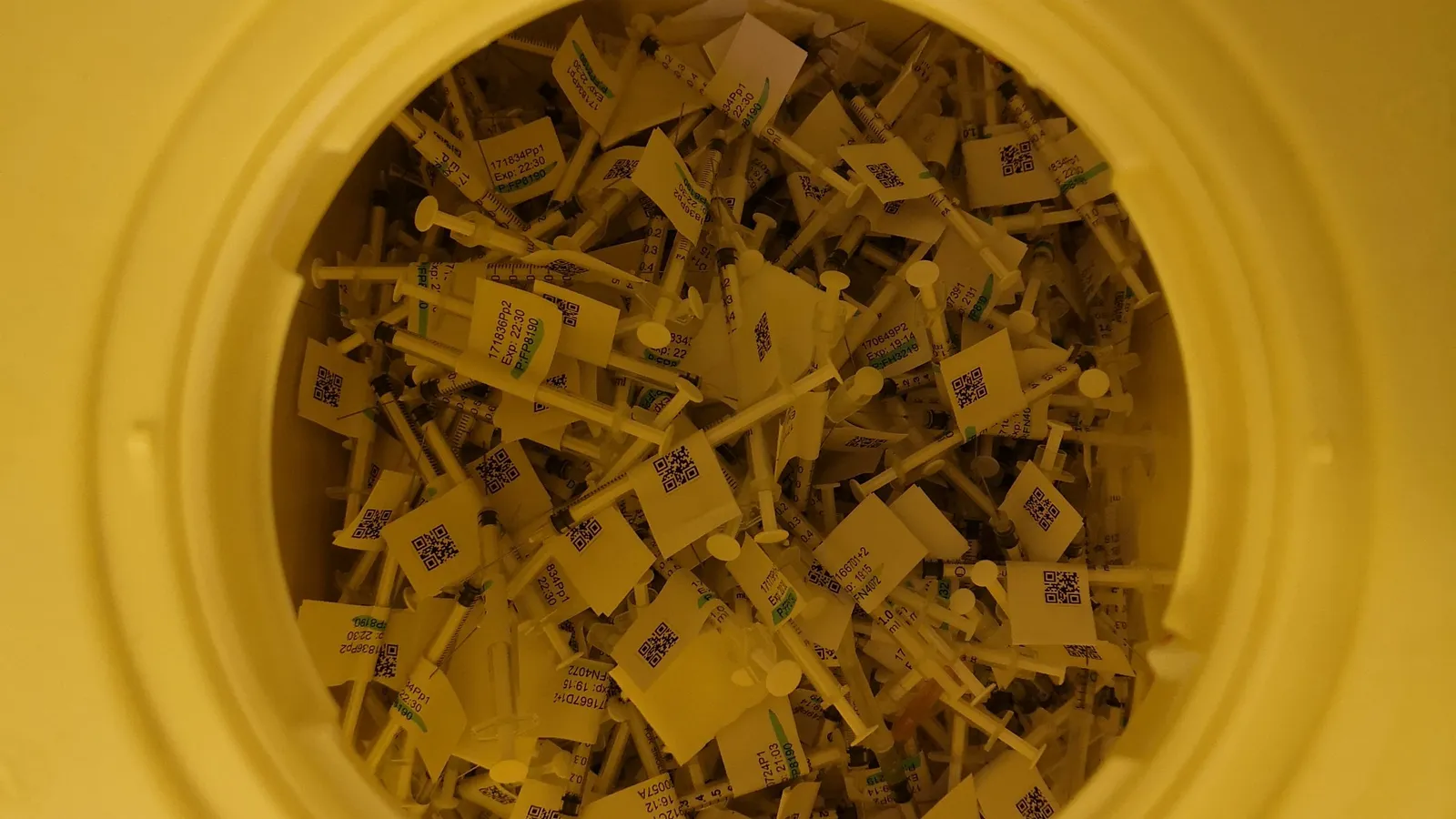
Our full guide on sharps disposal covers state-by-state differences and first aid for needlesticks. The FDA’s rule is that used needles go into a sharps container right away.
An FDA-cleared container is made of strong plastic that needles can’t poke through, with a tight lid. If you don’t have one, you can use a heavy-duty plastic household container, such as a laundry detergent bottle.
Never put loose needles in household or public trash or recycling, and never flush them. Loose needles can hurt others and spread infections such as hepatitis B, hepatitis C and HIV. When the container is about three-quarters full, follow your community’s rules for getting rid of it, and don’t reuse it.
Auto-injectors count as sharps too. The Xyosted instructions say not to put the used pen in household trash. Options include drop-off sites, household hazardous waste sites, mail-back programs and special pick-up, and they vary by where you live.
If you prick yourself with a used needle, wash the area right away with soap and water or a skin antiseptic. Then call your doctor or local hospital.
Why should you log every injection?
Because your memory isn’t a reliable record. A log of the date, time, site and side of each shot keeps your rotation honest. It shows you at a glance if one spot keeps getting sore, and gives your prescriber exact details if a lump or reaction appears.
Labels that mention rotation, such as AVEED’s left-then-right buttock, assume you know where the last shot went.
A log also makes your blood tests easier to read. Your total testosterone result means more when you know how many days it’s been since your last shot. Your hematocrit trend, the share of your blood made up of red cells, is easier to discuss when the schedule behind it is written down.
A useful log entry has five parts:
- Date and time of the injection.
- Site and side, for example left outer thigh.
- The vial, especially when you start a new one.
- Anything unusual: pain, a bump, bleeding, a late injection.
- Blood tests, with the date, time and days since the last injection.
The TRTracker app does this logging for you. It records each injection on the app’s body map, suggests the next site, and shows which sites you’ve used recently. A notebook works too; what matters is that you write it down every time.
What should you ask your nurse or prescriber about injecting?
- Is my product for IM or SubQ use, and which sites can I use?
- Which syringe and needles should I use for drawing up and for injecting?
- Can you show me how to inject and watch me do the first one?
- What rotation pattern do you suggest?
- What reactions are normal, and which should I call you about?
- What should I do if I’m late with an injection or traveling?