
What does ferritin tell you on TRT?
Ferritin on TRT is a measure of your iron stores, and it can fall during treatment. Testosterone lowers hepcidin, a hormone that keeps iron locked away. So more stored iron goes into making red blood cells.
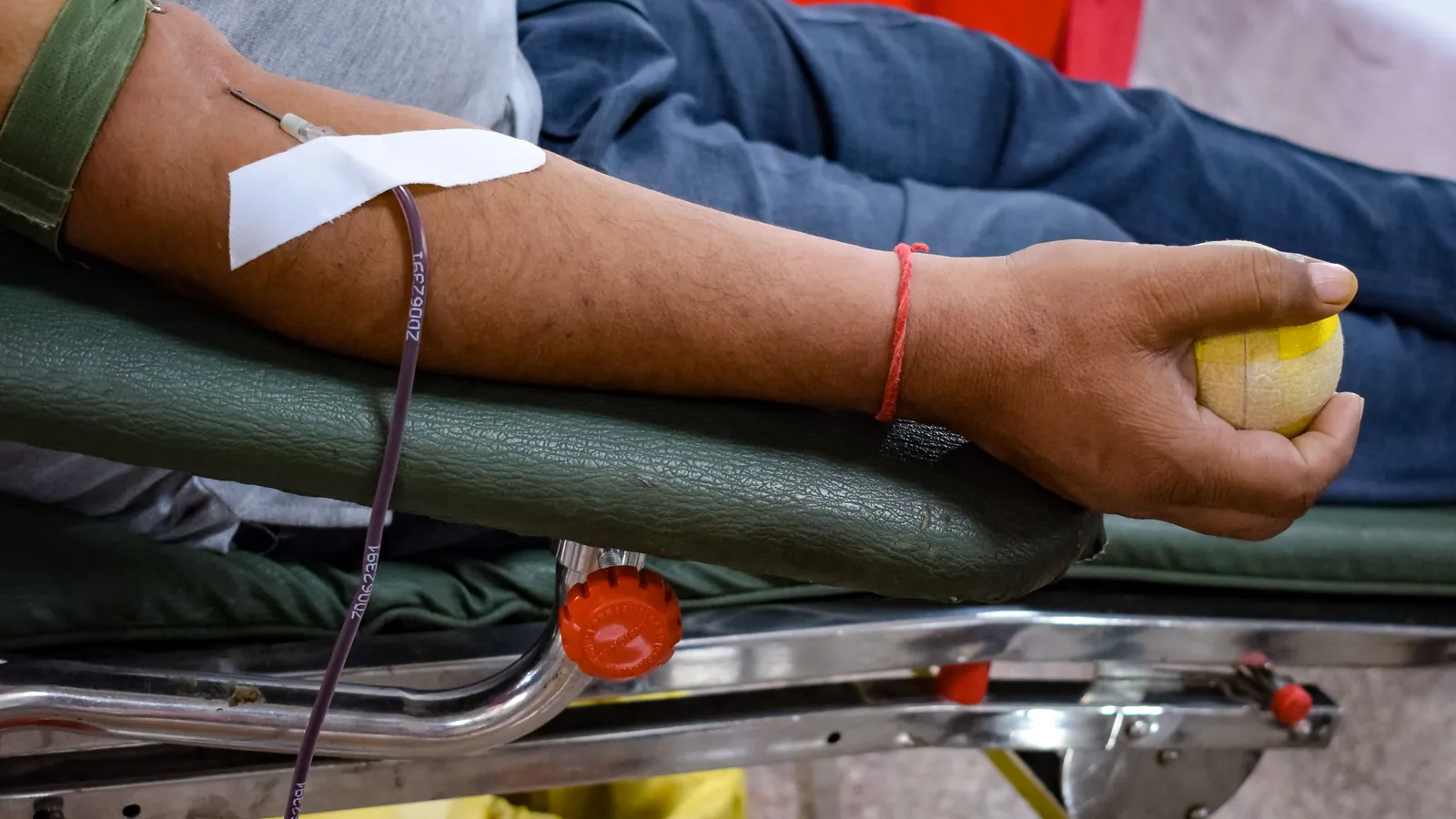
Giving blood takes iron out of the body as well. That includes a donation and phlebotomy, where blood is removed on a prescriber’s order.
Ferritin isn’t a routine TRT test in either major guideline. It’s one of the extra tests in our guide to TRT blood work. It usually comes up when hematocrit is high or someone gives blood.
What is ferritin?
Ferritin is a protein that stores iron inside your cells. A small amount floats in the blood, and the blood level tracks how much iron you have in storage. Most US labs report it in ng/mL, which is the same number as µg/L.
Your body needs iron mainly to build hemoglobin, the protein in red blood cells that carries oxygen. When red cell production speeds up, the bone marrow draws on those stores. When iron is lost, for example through bleeding or giving blood, the stores shrink first.
Anemia, a low red cell count, only appears later. That’s why ferritin is often the first number to drop. A low ferritin with a normal blood count means your reserve is low, but red cell production hasn’t suffered yet.
A low ferritin with low hemoglobin is iron-deficiency anemia. Ferritin is often ordered as part of an iron panel. The other tests on that panel show how much iron is in the blood and how much room its carrier protein has left.
Those tests are serum iron, total iron-binding capacity and transferrin saturation. Together they help tell true iron deficiency apart from inflammation or other causes.
Why can ferritin fall on TRT?
Testosterone changes how the body handles iron. Hepcidin is the hormone that controls how much iron leaves storage and how much is taken in from food. In young and older men given weekly testosterone shots at different doses, high testosterone levels sharply lowered hepcidin within one week.
In older men on testosterone gel for six months, hemoglobin rose by 7% and hematocrit by 10%. Ferritin and hepcidin fell at one and three months. Hepcidin then drifted back toward its starting level by six months, which fits with more iron being used to make red cells.
A year-long trial looked at men aged 65 and over with anemia. In men whose anemia had no clear cause, testosterone gel lowered ferritin by about 19.6 µg/L over the first three months. In men who already had iron-deficiency anemia, hepcidin and ferritin didn’t fall, and hemoglobin rose less.
The authors concluded that low iron seems to blunt testosterone’s effect on red cells. Reviews list hepcidin and iron handling among the reasons testosterone raises red cell counts. These trials were in older men on gel.
We found no large study of ferritin over time in younger men on injections. Your own results will show how much yours changes. Our hematocrit page covers the red cell side of the story.
Why can hematocrit be high while ferritin is low?
It sounds odd, but the two often go together on TRT. Testosterone drives the marrow to make more red cells, which raises hematocrit. Those new cells are built from stored iron, which lowers ferritin.
Regular blood donation or phlebotomy removes iron with every unit. So stores can fall further while the red cell count stays high.
A high hematocrit doesn’t mean you have plenty of iron. Hematocrit measures the red cells you have now, while ferritin measures the reserve you’d draw on to make more. Your prescriber reads them together.
What is a normal ferritin level for men?
There are two kinds of numbers, and they answer different questions:
- Your lab’s reference range describes results in the people the lab used to set it. One US hospital lab gives a male range of 30 to 566 ng/mL. It says ranges depend on the lab’s method and age cut-offs.
- Cut-offs for iron deficiency or overload come from the World Health Organization (WHO). They are used to diagnose, not to describe normal.
| Number | Where it comes from | What it’s for |
|---|---|---|
| Below 15 µg/L | WHO | Iron deficiency in apparently healthy adults |
| Below 70 µg/L | WHO | Iron deficiency when infection or inflammation is present |
| Above 200 µg/L in men | WHO | A flag to look for iron overload, not a diagnosis |
| 30 to 566 ng/mL | One US hospital lab | That lab’s male reference range |
No guideline sets a ferritin target for men on TRT. Our guide to reading lab results explains reference ranges and flags.
You’ll see “ideal” ferritin numbers in forums and clinic ads. We found no primary source for them, so we don’t repeat them here.
What are the signs of low iron in men?
Low iron often causes no symptoms until it’s fairly advanced. When it does, it can cause tiredness, weakness and paler skin than usual. It can also cause dizziness, shortness of breath and a fast heartbeat.
These signs overlap with many other things, including low testosterone, poor sleep and depression. That’s why a blood test, not a symptom checklist, decides it. If you notice them on treatment, tell your prescriber rather than starting iron on your own; too much iron causes its own harm.
Iron can be lost through bleeding in the gut as well as through giving blood. A low ferritin with no clear reason, such as frequent donation, is worth raising with your prescriber so the cause can be looked for.
Why can ferritin look normal or high when iron is low?
Ferritin also rises with inflammation, which makes it an “acute-phase” protein. Infection, liver disease, obesity and some cancers can all push it up, which can hide low iron stores. Researchers describe judging iron status during inflammation as a real challenge.
That’s why the WHO uses a higher cut-off, below 70 µg/L, to call iron deficiency when inflammation is present. It’s also why your prescriber may order other iron tests alongside ferritin. These include serum iron, total iron-binding capacity and transferrin saturation.
If you had a cold, an injury or a hard training block before the test, mention it.
What does a high ferritin mean?
A high ferritin is more often a sign of inflammation, liver disease or obesity than of too much iron. The WHO says ferritin shouldn’t be used on its own to identify iron overload.
Sometimes it is iron overload. Hemochromatosis is an inherited condition in which the body absorbs too much iron. It’s most often caused by changes in a gene called HFE.
Men are more likely to develop iron overload than women. Symptoms usually don’t appear before age 40.
Iron overload can itself cause low testosterone. In a review of 1,201 men with iron-overload disorders such as hemochromatosis and thalassaemia, 47% had hypogonadism, meaning low testosterone. That’s why the AUA lists iron studies among the tests that can help when low testosterone starts in the pituitary gland.
The LH and FSH page explains how that type of low testosterone is identified.
How do blood donation and phlebotomy affect ferritin?
Giving blood removes iron, because every red cell carries some. A large US study looked at men who donated often. 16.4% had no iron stores left and 48.7% had red cell production limited by low iron.
The more often someone gave, the higher the risk. The follow-up found similar numbers in frequent male donors over time.
Iron also comes back slowly. The AABB, which sets standards for US blood banks, reports a finding on donors who didn’t take supplements. At 24 weeks after a donation, two-thirds still hadn’t recovered the iron they lost.
That’s a finding about donors in general, not a recommendation for you.
Donor screening doesn’t measure iron stores directly. US rules require male donors to have a hemoglobin of at least 13.0 g/dL. The American Red Cross checks hemoglobin, not iron, before donation.
So a man on TRT can pass that check with a high hemoglobin while his iron stores run low.
Therapeutic phlebotomy, where blood is removed on a prescriber’s order, has the same effect. A 2024 review found little evidence on how well or how safely it manages high hematocrit caused by testosterone. It also noted that phlebotomy uses up iron stores over time.
Blood centers have no TRT-specific donation rules; they handle these donors case by case.
Whether donation or phlebotomy has any place in your care is a decision for your prescriber. If you already give blood, tell them how often. It changes how they read both your hematocrit and your ferritin.
Is ferritin part of routine TRT blood work?
No. The Endocrine Society’s monitoring plan covers testosterone, hematocrit and prostate checks. The AUA’s follow-up table has no ferritin row.
The AUA mentions iron studies only when checking the cause of low testosterone that starts in the pituitary.
Prescribers may still order it, for example:
- When hematocrit is high, to understand the iron picture before deciding what to do.
- When you donate blood or have phlebotomy, because both remove iron.
- When symptoms or other results suggest low iron, such as a falling hemoglobin.
- When looking for a cause of low testosterone, where iron overload is one possibility.
If ferritin is checked, it usually goes into the same draw as your other TRT labs. Note the date of any recent donation or phlebotomy next to the result. Iron stores drop after each one and take months to rebuild.
Don’t order iron tests for yourself and act on them. A ferritin result is a question for your prescriber. The TRT blood work schedule shows when the routine tests happen.
What should you ask your prescriber about ferritin?
- Should my ferritin be checked, given my hematocrit and whether I donate blood?
- What does my result mean alongside my hemoglobin and other iron tests?
- Could inflammation or a recent illness be affecting it?
- If it’s low, what’s the likely cause, and what’s the next step?
- If it’s high, do I need tests for iron overload?
How can you track ferritin over time?
Ferritin tells you the most when you see it next to hematocrit and hemoglobin from the same draw. It also helps to note any donations or phlebotomy in between. A falling ferritin with a steady hematocrit tells a different story from both moving together.
TRTracker keeps each marker against its own lab range, so you can bring a clear picture to your prescriber. The blood test timing tool shows when to book draws. The testosterone level calculator shows how your schedule shapes testosterone between injections.
For the wider picture, start with what to monitor on TRT.